



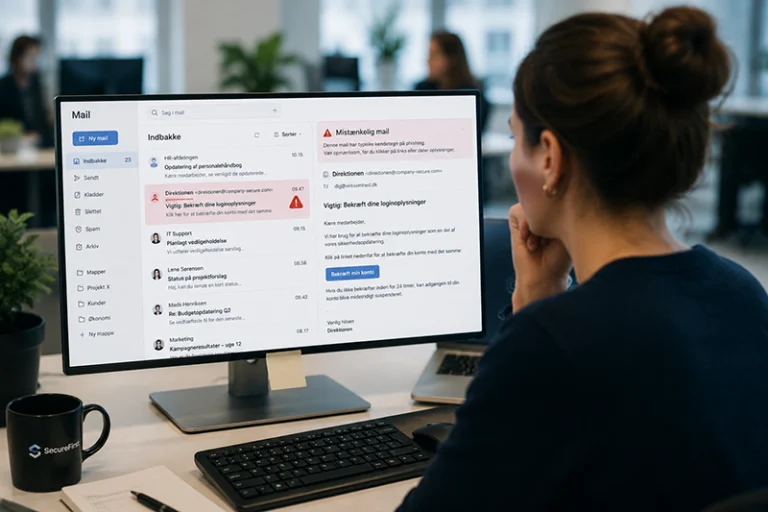
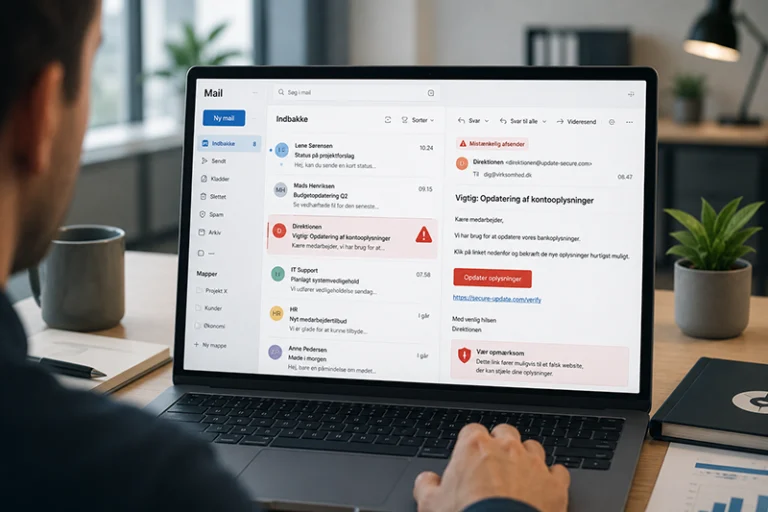
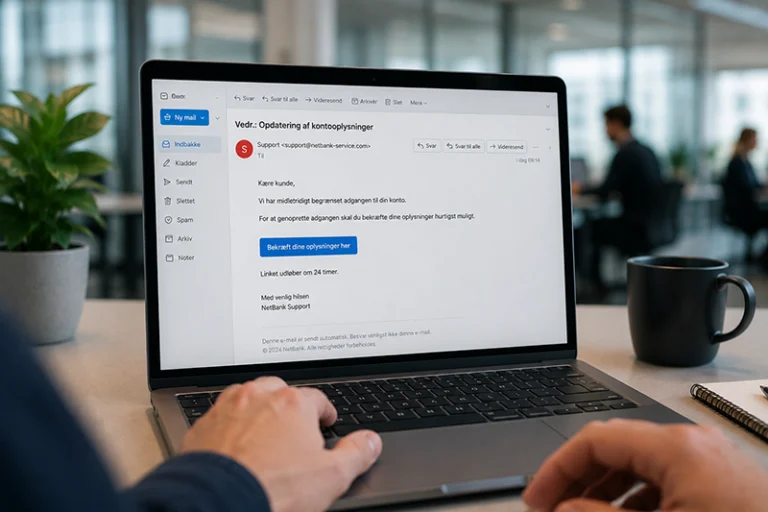


Phishing tests can provide valuable insights into how employees respond to fake emails. However, if the test focuses solely on who clicks the links, it can quickly lead to feelings of guilt, resistance, and unease in the workplace.
That is why success in phishing tests should be measured more broadly. The click-through rate is important, but it doesn’t tell the whole story. It is just as important to look at reporting, learning, improvement over time, and whether employees are becoming more confident in responding correctly.
We help companies make phishing tests learning-oriented. With realistic test emails, immediate feedback, and reporting, you can track progress without making employees the problem.
Why should phishing tests be evaluated?
Phishing tests provide a clearer picture of employee behavior.
Instead of just talking about risk, the company can see:
- how employees react to realistic emails
- which types of emails generate the most clicks
- Does mindfulness training work?
- where follow-up is needed
- what the trend looks like over time
- whether the effort can be documented
For management, this provides a clearer picture of the risks. For IT, it provides data for follow-up. For HR, it provides a basis for training and onboarding. For compliance, it provides documentation.
Phishing tests should not be about assigning blame
A phishing test should not be used to embarrass employees. If employees feel trapped or humiliated, it can damage the security culture. They may become less likely to report suspicious emails or ask for help when they are unsure.
Therefore, phishing tests should be used for:
- learning
- feedback
- improvement
- reporting
- documentation
- shared safety culture
With SecureFirst, employees receive immediate feedback if they click on a link in a test email. The feedback explains what warning signs the email contained and what the employee should do next time. This turns the test into a learning experience rather than a blame game.
5 KPIs You Should Track
Phishing tests aren’t just about the click-through rate. The click-through rate is often the first metric companies look at. It’s a relevant metric, but it’s not enough. A high click-through rate may indicate a need for more training. A low click-through rate may indicate progress. But the number doesn’t tell the whole story. Here are 5 KPIs you should measure to get a more accurate picture of whether your phishing tests are actually improving employee behavior and your company’s security culture.
KPI 1: Click-through rate over time
The click-through rate shows how many employees click on a link in a phishing test. It is an important metric because it provides an initial insight into how vulnerable the organization is to certain types of emails. However, the click-through rate should always be measured over time. A single test can be influenced by the email’s subject line, difficulty level, or timing. What’s interesting is the trend. If the click-through rate decreases over several tests, it suggests that employees are getting better at pausing to evaluate emails before clicking. On our platform, you can track click-through rates over time and see if the training is making a difference.
KPI 2: Reporting Rate
An employee who detects and reports a suspicious email is an asset to the company. That’s why you shouldn’t just measure mistakes. You should also measure the right behavior. The reporting rate shows how many employees actively forward a suspicious email to IT or the responsible security department. It’s an important KPI because phishing isn’t just about avoiding clicks. It’s also about responding correctly when something seems suspicious. If the reporting rate increases, it’s a sign that employees are becoming more vigilant and more confident in taking action.
KPI 3: Repeat clicks
It is normal for employees to click on a phishing test. This should not be used to single out individuals. However, it is important to examine whether the same types of mistakes are recurring. Repeated clicks can indicate where more targeted training is needed. This could be specific types of emails, departments, or work situations that pose a particular risk. Here, it is important to use data constructively. The goal is not to find scapegoats, but to understand where training needs to be strengthened.
With our platform, you can track patterns in phishing tests and use those insights to tailor your awareness training.
KPI 4: Conducting awareness training
Phishing tests show how employees react in real-world situations. Awareness training teaches them how they should respond. That is why the completion of awareness training should also be a key KPI. If many employees do not complete the training, it is difficult to expect lasting behavioral change.
You should measure:
- how many people complete the training
- how quickly they implement it
- how they do on quizzes
- whether completed training affects the click-through rate
- which departments require follow-up
KPI 5: Improvement Based on Feedback
A good phishing test doesn’t stop at a click. It should provide employees with specific feedback so that mistakes can be turned into learning opportunities. That’s why you should measure whether employees and teams improve after receiving feedback. If a department clicks a lot in one test but performs better after targeted training and explanation, that’s a strong sign of effectiveness.
Our platform emphasizes immediate feedback as a key component of phishing simulations. When employees are immediately shown the warning signs, the learning experience becomes more concrete and easier to remember for next time.
What should management look for in the reports?
Management rarely needs technical details. It needs an overview, progress, and clear next steps.
A good report should include:
- total click-through rate
- Progress since the last test
- reporting rate
- completed awareness training
- types of emails that are particularly vulnerable
- departments requiring follow-up
- Recommended next steps
With our platform, you can use reports to document progress for management, the board of directors, customers, insurance providers, or compliance officers.
Avoid these measurement errors
Companies should avoid:
- measure only by click-through rate
- list employees by name
- use the test for assessment rather than learning
- refrain from giving feedback
- conduct tests without follow-up
- ignore the reporting rate
- comparing departments without context
- skip the awareness training
Phishing tests are most valuable when used to understand behavior and improve training.
How to get started
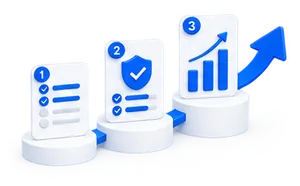
A good process might look like this:
- Define the purpose of your phishing tests.
- Let your employees know that the purpose is learning.
- Send realistic but safe test emails.
- Provide feedback right away with a single click.
- Track click-through rates, reporting, and trends over time.
- Combine the results with awareness training.
- Use the reports to track progress.
We help you consolidate these steps into a single platform, making it easier to conduct, follow up on, and document phishing tests.
Goal setting
Phishing tests are most valuable when used for learning and improvement. The click-through rate is important, but it should never be the only metric. Companies should also measure reporting, repeat clicks, completion of awareness training, and improvements made based on feedback.
When used effectively, phishing tests become a tool for improving employee behavior and strengthening the company’s security culture.
With our platform, you can combine phishing simulations, awareness training, and reporting into a single platform. This makes it easier to conduct tests, provide employees with feedback, and track progress over time without making employees the problem.