









Manage ISO 27001 with a risk-based overview and documented progress
Many companies already take a risk-based approach to information security, but lack a simple way to document decisions, follow up on activities, and identify the next steps.
SecureFirst helps you bring structure to your ISO 27001 efforts, making it easier to organize and build upon risks, policies, tasks, documentation, and awareness over time.
Get an overview of the next steps toward ISO 27001
Guidelines for Risks, Activities, and Documentation in a Practical Process
Support management and employees with relevant awareness training
See how SecureFirst can help you bring structure, clarity, and momentum to your ISO 27001 efforts.
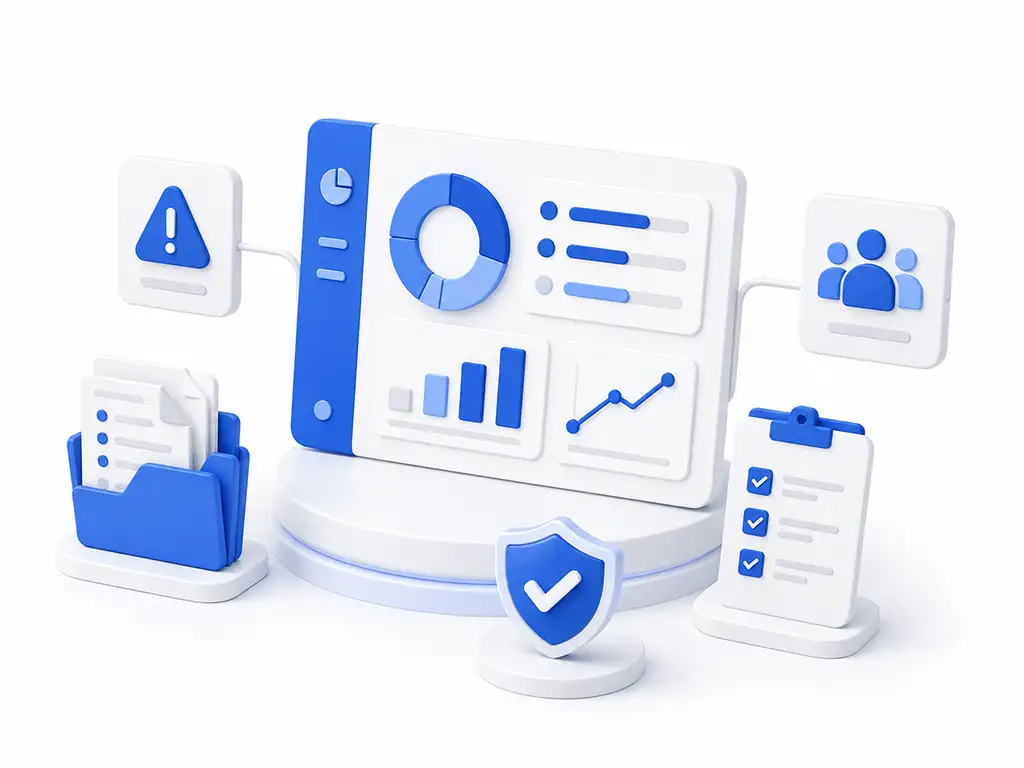
















Many organizations already use a risk-based approach, but lack the necessary documentation
ISO 27001 is not about choosing random security measures. The standard is based on a risk-based approach, under which the organization must be able to demonstrate how risks are assessed, managed, and monitored over time.
Many companies are already doing much of this work in practice. They assess risks, prioritize security measures, and make ongoing decisions regarding information security.
The challenge is often that the work isn't organized and documented clearly enough.
- What risks have been assessed?
- What decisions have been made?
- Who is responsible for follow-up?
- What's the next step?
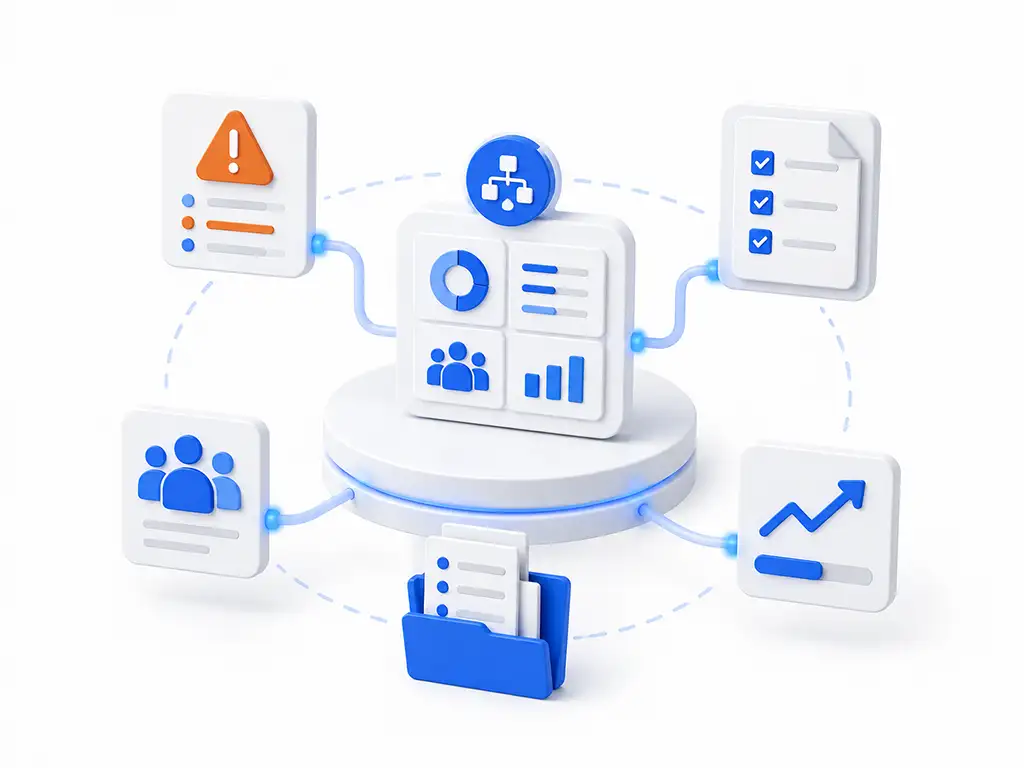
When risks, policies, activities, and documentation are scattered, ISO 27001 becomes difficult to manage. This also makes it harder for management to prioritize efforts and for the organization to demonstrate how its security work is progressing.
From an Overview to Continuous Improvements
Get Started with ISO 27001
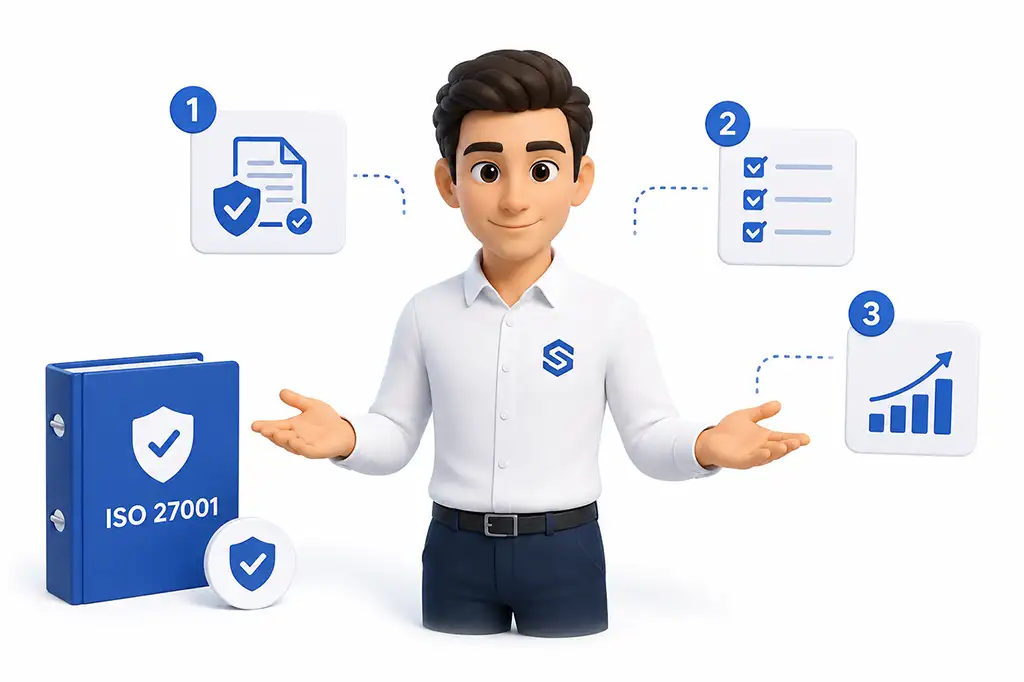
ISO 27001 becomes easier to implement when risks, responsibilities, and documentation are consolidated into a process that can be tracked over time.
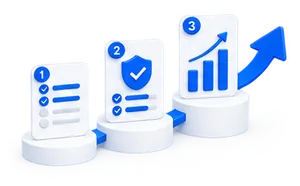
Step 1
Take stock of your current work
Many companies do not start from scratch. There are often already policies, risk assessments, security measures, internal workflows, or decisions in place that can serve as a starting point.
The first step, therefore, is to take stock of what you’re already doing today. This will give you a more realistic picture of where things are under control and where there is a lack of structure, documentation, or clear follow-up.
The assessment helps IT and management view ISO 27001 as a further development of existing security efforts—not as an entirely new project that must be built from scratch.
Step 2
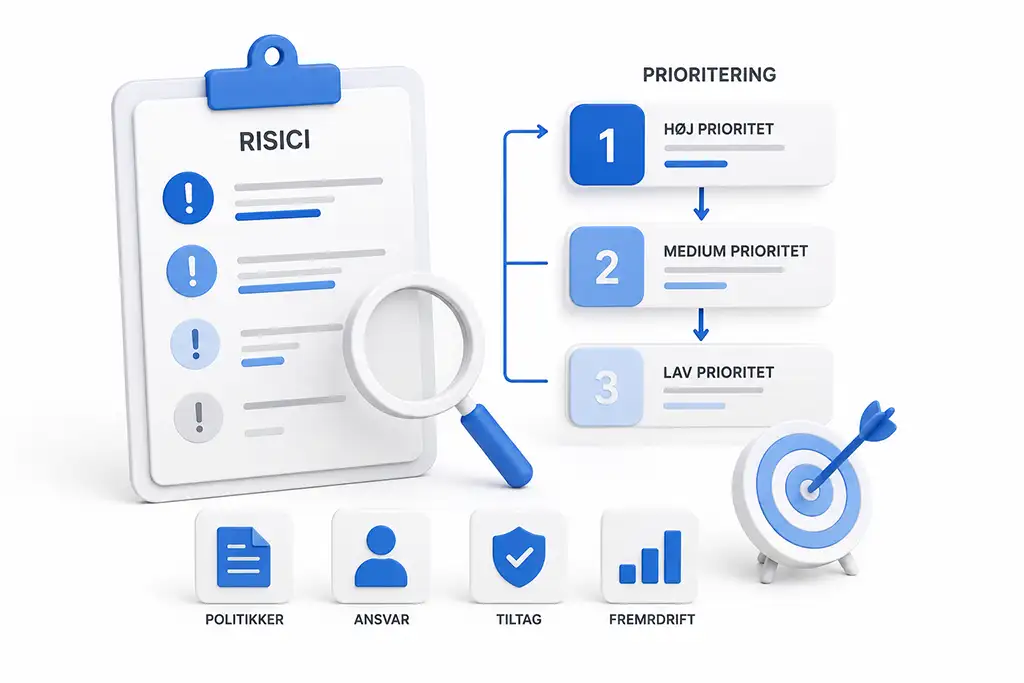
Prioritize the next steps based on risk
Step 3
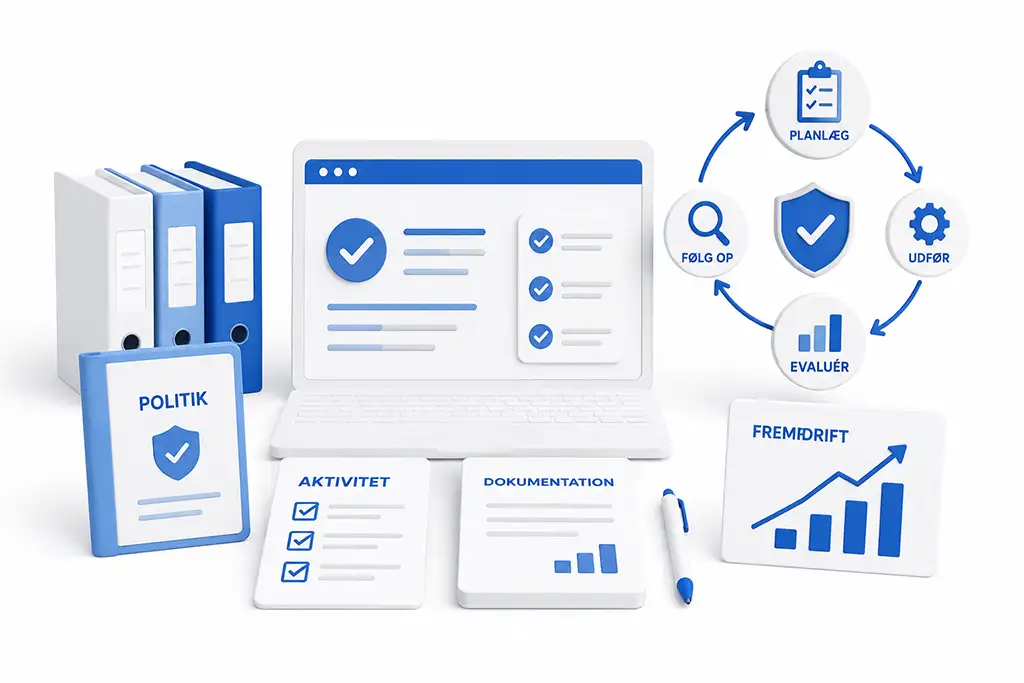
Document and follow up on an ongoing basis
From Dispersed Activities to Centralized Management
How SecureFirst Helps with ISO 27001
SecureFirst guides you through managing risks, tasks, policies, documentation, and awareness, making it easier to translate ISO 27001 into a practical process.
You’ll gain a clearer picture of where you stand today, which activities should be prioritized, and what the next steps might be. This makes it easier for IT and management to work toward the same goals.
ISO 27001 does not require everything to be perfect from the start. What matters is that the organization can manage risks systematically, make clear decisions, and document improvements over time.
With SecureFirst, you get a framework that supports ongoing monitoring. It helps you keep your work moving forward, document decisions, and demonstrate how information security is evolving.
Try our ISO 27001 Compliance module
Link to our privacy policy and terms.
Clients already secured with SecureFirst:





Need clarification?Frequently Asked Questions About ISO 27001

What is ISO 27001?
ISO 27001 is an international standard for information security management. The standard helps organizations take a systematic approach to risks, security measures, policies, responsibilities, and continuous improvement.
At the heart of ISO 27001 is an information security management system, also known as an ISMS. It provides the organization with a framework for how information security is planned, implemented, documented, and monitored over time.
ISO 27001 is therefore not just about IT technology. It is also about management responsibility, risk management, processes, employee behavior, and the ability to document how the organization manages information security.
Who is ISO 27001 relevant for?
ISO 27001 is relevant for companies and organizations that want to take a more structured approach to information security and be able to document their efforts.
The standard is often used by companies that handle sensitive data, provide digital services, act as data processors, participate in tenders, or meet requirements from customers and business partners. It may also be relevant for organizations that want a clearer framework for risk management and security efforts.
ISO 27001 is not just relevant for large companies. Small and medium-sized enterprises can also use the standard as a framework to gain an overview, prioritize security measures, and make it easier to follow up on their work.
Is ISO 27001 a legal requirement?
ISO 27001 is not, as a general rule, a legal requirement. It is an international standard that companies may choose to follow or to obtain certification for.
In practice, ISO 27001 may still be important if customers, business partners, tenders, or industries require documented information security. For some companies, the standard therefore becomes a commercial or contractual requirement, even though it is not, in and of itself, a law.
ISO 27001 can also be used as a practical framework to support efforts related to security, accountability, and documentation in connection with other requirements and regulations. However, this does not mean that ISO 27001 certification automatically demonstrates compliance with all relevant laws.
What is an ISMS?
An ISMS is an information security management system. It is the framework that an organization uses to manage risks, policies, security measures, follow-up, and documentation.
An ISMS helps an organization make information security an ongoing process rather than a series of one-off activities. It provides an overview of what has been decided, who is responsible, which risks have been prioritized, and how the work is being monitored.
An ISMS doesn't have to start out as a large and complex system. For many companies, the first step is to consolidate their existing security efforts, make decisions transparent, and establish a practical way to document progress.
What does ISO 27001 require?
ISO 27001 requires that an organization establish, maintain, and continuously improve an information security management system. This involves, among other things, risk assessment, risk management, management commitment, policies, documentation, and follow-up.
The standard does not prescribe a single, fixed list of security measures that all organizations must implement in the same way. Instead, each organization must assess its own risks and select appropriate measures based on its needs, context, and management’s priorities.
This means that ISO 27001 must be tailored to the organization. The process is most effective when risks, decisions, and activities are documented, so that the company can demonstrate why specific measures were chosen and how they are followed up over time.
How do you get started with ISO 27001?
The best way to get started with ISO 27001 is to begin by mapping out the security measures your company already has in place. Many companies already take a risk-based approach but lack a comprehensive way to document decisions, activities, and responsibilities.
The next step is to assess the most significant risks and prioritize what needs to be addressed first. This could include policies, access control, supplier management, awareness, incident management, or better documentation of existing processes.
ISO 27001 doesn't require everything to be perfect from the start. The most important thing is to establish a process that allows the company to continuously assess risks, implement improvements, and document progress.
Is it possible to implement ISO 27001 without getting certified?
Yes, a company can certainly use ISO 27001 as a framework for information security without becoming certified. Many organizations start by using the standard to create structure, clarity, and better documentation.
If certification is not the goal, the level of documentation can, in practice, be tailored to the company’s needs. It can still provide significant value because the standard helps clarify responsibilities, risks, processes, and next steps.
If the company later wishes to obtain certification, the documentation must be sufficient to allow an auditor to assess whether the requirements have been met. Therefore, it is advantageous to structure the work in a way that can be further developed over time.