













Why technology isn't enough when it comes to social engineering.
Many companies invest in advanced security solutions such as firewalls, endpoint protection, and email filtering.
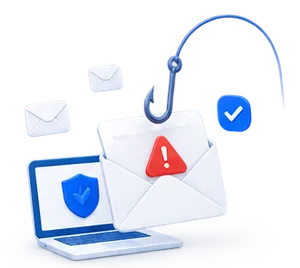
Yet many cyberattacks succeed, and the reason is simple. Social engineering targets people, not systems.
Cybercriminals exploit psychological mechanisms such as:
- trust
- authority
- time pressure
- fear
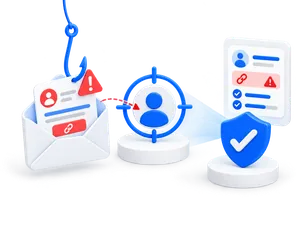
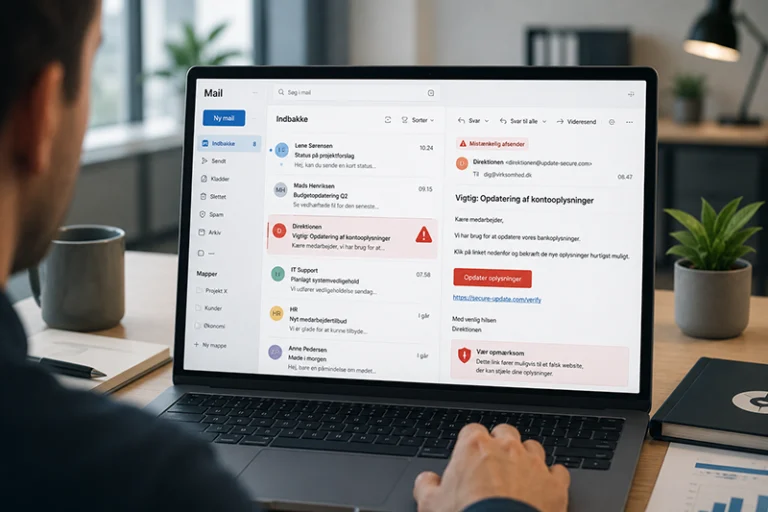
A well-crafted phishing attack can therefore trick an employee into clicking a link, authorizing a payment, or revealing login credentials—even in organizations with robust technical security measures.
Therefore, the most important lesson for businesses is:
Technology alone won't stop social engineering.
Effective protection requires a combination of human awareness, practical training, and clear safety procedures.
How Companies Protect Themselves Against Social Engineering
For organizations looking to reduce the risk of social engineering attacks, there are three areas in particular that make a significant difference.
1. Employee security awareness
Employees are often the first line of defense against cyberattacks.
That is why security awareness is one of the most effective investments in cybersecurity.
Employees must understand:
- What phishing emails look like
- how social engineering attacks work
- what warning signs they should respond to
- what to do if they are unsure
When employees learn to recognize manipulation and suspicious communications, many attacks can be stopped before they escalate into security breaches.
Enhance your employees' understanding of cybersecurity
2. Phishing simulations test an organization’s resilience
Theoretical knowledge is important—but practical training is essential.
Phishing simulations send realistic phishing emails to employees to test how the organization responds to an attack.
The benefits include:
- Employees learn through realistic scenarios
- the company gains insight into risky behavior
- The level of security can be measured and continuously improved
Simulations make cybersecurity tangible and help organizations build a stronger security culture.
Test your organization with a phishing simulation
3. Clear safety procedures reduce the risk
Even physically fit employees can feel overwhelmed during a busy workday.
That is why clear security procedures are essential for reducing the risk of social engineering.
Examples of effective procedures include:
Verification of payment requests
All payment requests should be verified through another channel.
Rules for sharing login credentials
Login credentials must never be shared via email or phone.
Secure Handling of External Inquiries
Employees must know how to verify inquiries from suppliers, IT support, or management.
When procedures are clear and well-known throughout the organization, it becomes more difficult for attackers to manipulate employees.
Social engineering is a management task
Social engineering isn't just an IT problem. It's an organizational challenge that involves:
- management
- HR
- IT
- finance departments
- all employees
Companies that systematically focus on awareness, training, and security procedures are far better equipped to handle modern cyber threats.
See what it costs to strengthen your cybersecurity
Protection against social engineering requires more than just technology
Social engineering is one of the most common cyber threats facing businesses.
The attacks exploit human behavior, not technical vulnerabilities.
Therefore, effective protection against social engineering requires a combination of:
- security awareness
- phishing simulations
- clear safety procedures
When companies systematically address these areas, they can significantly reduce the risk of cyberattacks and strengthen their overall cybersecurity.